Sciatica PRO+ Official Website › Blog › Ingredients in Sciatica Pro Plus
What Are The Ingredients In Sciatica Pro Plus? All Ten Label Rows Explained
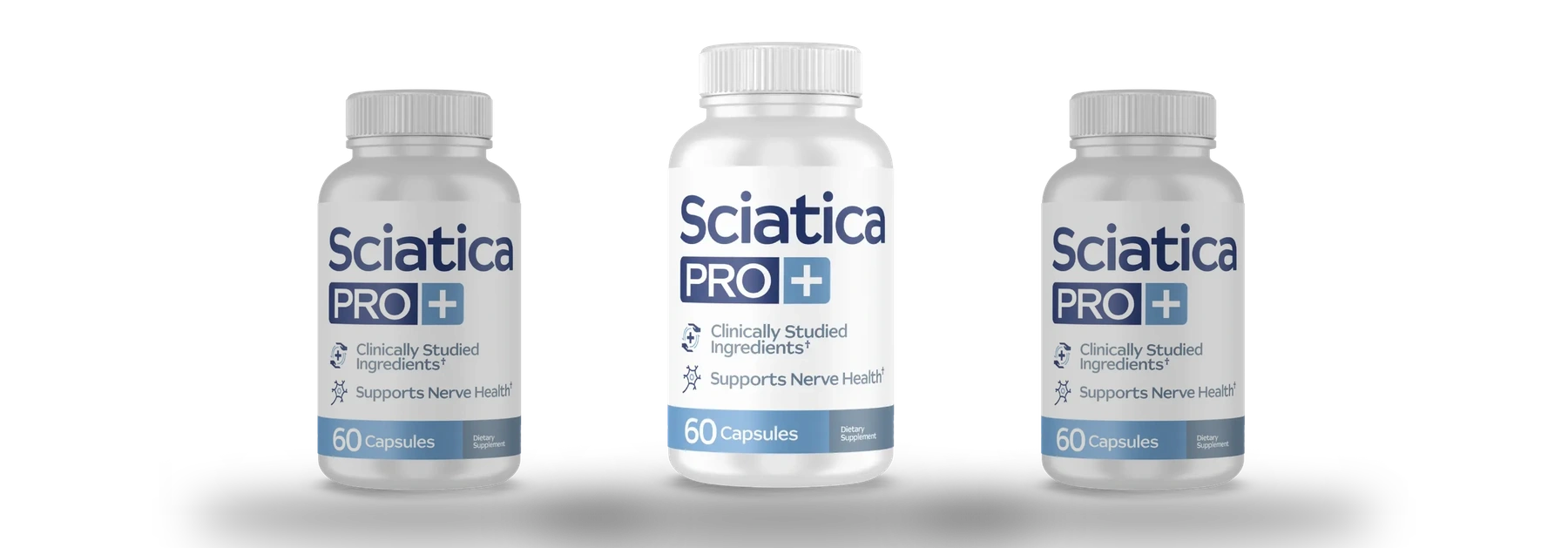
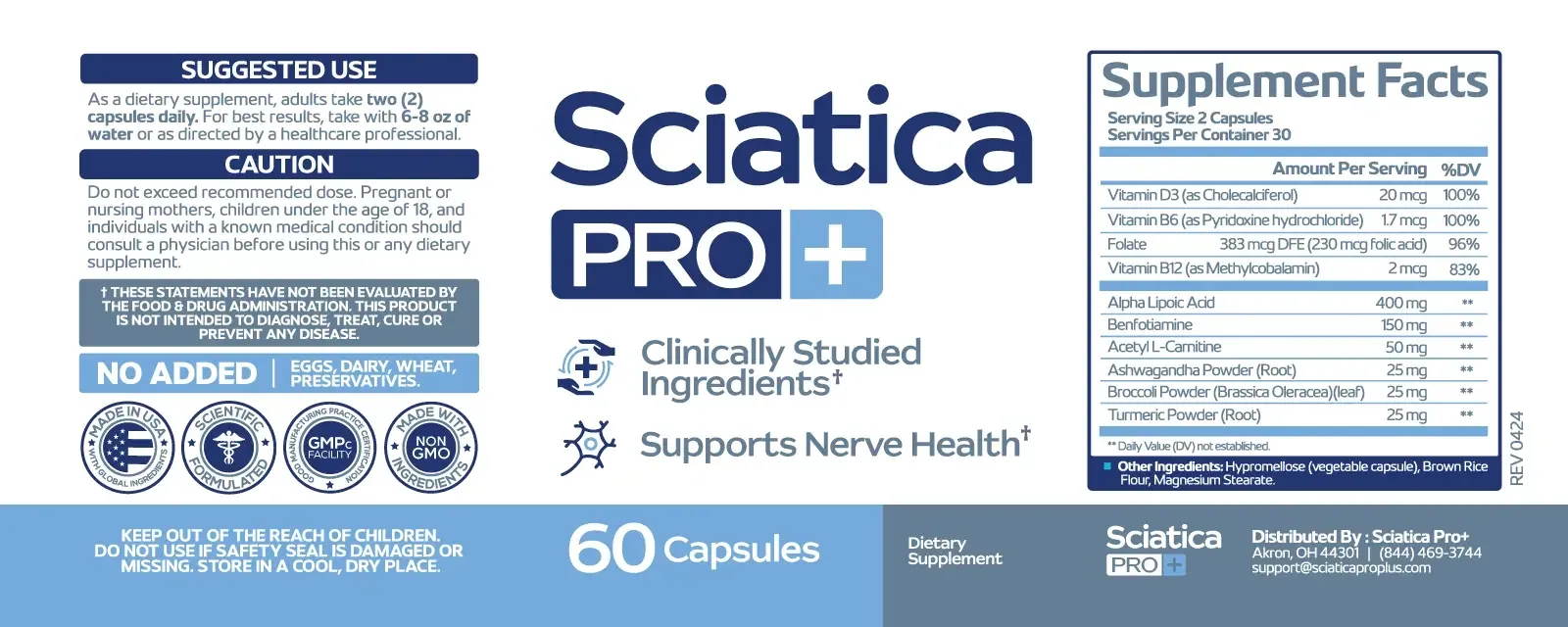
Sciatica PRO+ lists ten ingredients per two-capsule serving: vitamin D3, B6, folate and B12, then alpha lipoic acid 400 mg, benfotiamine 150 mg, acetyl L-carnitine 50 mg, and ashwagandha, broccoli and turmeric powders at 25 mg each. Other ingredients are hypromellose, brown rice flour and magnesium stearate. No proprietary blend.
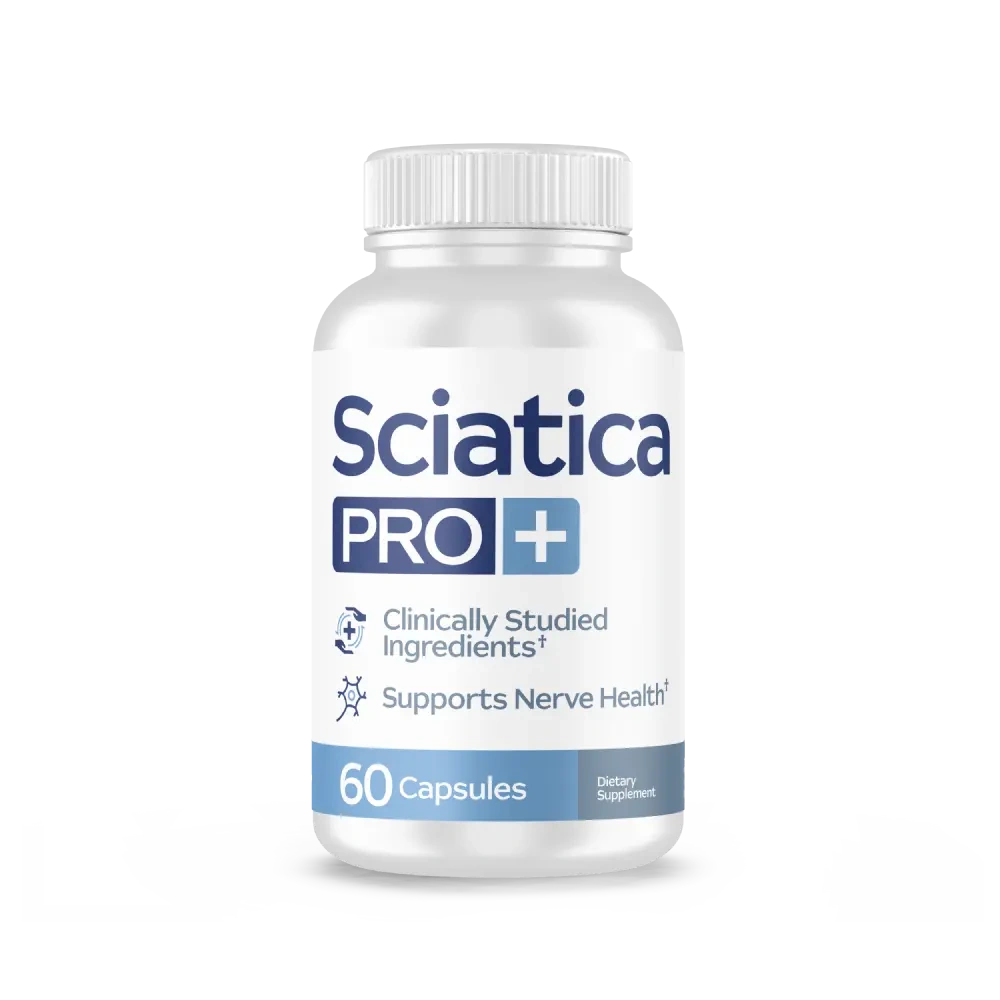
The full panel is public. If it looks reasonable to you, the official checkout shows the packs and the guarantee.
See today's price and guaranteeGetsciaticapro earns money when an order is placed through its checkout. The price you see there is the one that applies. How this website earns.
- Serving size is 2 capsules. There are 30 servings in a bottle of 60 capsules.
- Alpha lipoic acid (400 mg) and benfotiamine (150 mg) make up 550 mg of the serving.
- Acetyl L-carnitine (50 mg) and the three powders (25 mg each) add up to 125 mg.
- Vitamins are at about a day’s requirement: D3 100%, B6 100%, folate 96%, B12 83% of the Daily Value.
- Six rows have no Daily Value set, so the research amount is the only yardstick.
- Other ingredients: hypromellose (vegetable capsule), brown rice flour, magnesium stearate.
- The label states no added eggs, dairy, wheat or preservatives.
- Not FDA approved. Not a treatment for sciatica.
What is the full ingredients list on the label?
Here is the whole Supplement Facts panel as it is printed. This is the ingredients list people search for, laid out in one table.
| Ingredient | Per 2 capsules | % Daily Value |
|---|---|---|
| Vitamin D3 (as cholecalciferol) | 20 mcg | 100% |
| Vitamin B6 (as pyridoxine hydrochloride) | 1.7 mg | 100% |
| Folate (383 mcg DFE, as 230 mcg folic acid) | 383 mcg DFE | 96% |
| Vitamin B12 (as methylcobalamin) | 2 mcg | 83% |
| Alpha lipoic acid | 400 mg | – |
| Benfotiamine | 150 mg | – |
| Acetyl L-carnitine | 50 mg | – |
| Ashwagandha powder (root) | 25 mg | – |
| Broccoli powder (Brassica oleracea) (leaf) | 25 mg | – |
| Turmeric powder (root) | 25 mg | – |
Other ingredients: hypromellose (vegetable capsule), brown rice flour, magnesium stearate. A dash means no Daily Value has been set.
Ten ingredients, ten amounts. Nothing is tucked inside a proprietary blend, and that is the best thing about this label. You never have to guess how much of a row you are getting.
Which ingredients carry most of the weight?
Add up the milligram rows and a pattern appears. Alpha lipoic acid and benfotiamine together are 550 mg. The other four non-vitamin rows together are only 125 mg. The four vitamins are measured in micrograms and small milligram figures, so they add very little in weight.
Weight is not the same as value, but it shows the design. The formula is built around two ingredients that came out of nerve research. The rest are small extras around them.
A useful trick: a row with no Daily Value, marked with a dash, has no official target. That is why this post compares those rows with research doses instead.
What do the four vitamins add?
The vitamins sit at the top of the panel, and each is close to one day of the requirement. None is a showy multiple.
- Vitamin D3, 20 mcg. This is 800 IU. It is the fat-soluble form that raises blood levels well, and it takes up a little better with a meal.
- Vitamin B6, 1.7 mg. This is the adult requirement. Too little B6 harms nerves, and so does far too much, but this amount is nowhere near that range. The caution is about adding up several products.
- Folate, 383 mcg DFE. This comes from 230 mcg of folic acid. It is an ordinary amount, well under the 1,000 mcg daily upper limit for folic acid.
- Vitamin B12, 2 mcg. It is methylcobalamin. B12 has the firmest link to nerves, because a real shortfall can cause numbness and pins and needles. Two micrograms meets a requirement. It does not treat a diagnosed deficiency.
If your diet and blood tests already cover these four, they add little. Meeting a requirement twice gives you nothing extra.
Why are alpha lipoic acid and benfotiamine in the formula?
Alpha lipoic acid is a small compound the body makes in modest amounts. It works as an antioxidant in watery and fatty tissue alike. The oral trials mostly used 600 mg a day, and SYDNEY 2 compared 600, 1,200 and 1,800 mg. In SYDNEY 2, doses above 600 mg added nausea and no extra benefit. At 400 mg, this label is about two-thirds of the trial dose.
Benfotiamine is a fat-soluble relative of vitamin B1. The BENDIP trial gave 300 mg or 600 mg a day for six weeks, and the clearer signal came at the higher dose. The earlier BEDIP pilot used 400 mg a day. At 150 mg, the label is half of the lowest dose.
Both ingredients were studied mainly in people with nerve damage from high blood sugar. Their trials measured symptom scores, not nerve regrowth. A 2026 critical review of the pair says no study has shown regeneration. So treat these two as the best-supported rows, not as proven repairers.
Why are acetyl L-carnitine and the three powders so small?
This is the weakest part of the panel, and it is better to say so. The research amounts for these four rows are far larger than what the capsule holds.
| Ingredient | On the label | What the research used |
|---|---|---|
| Acetyl L-carnitine | 50 mg | 1,500 or 3,000 mg a day in two 52-week trials; pain scores improved only at 3,000 mg |
| Ashwagandha root powder | 25 mg | 300 to 600 mg a day of standardised extract, studied for stress rather than nerves |
| Turmeric root powder | 25 mg | 500 to 2,000 mg a day of standardised curcumin, usually with piperine |
| Broccoli leaf powder | 25 mg | No human trial at this form or dose; the nerve evidence is a rat study |
Culinary turmeric is only about 3% curcumin, so 25 mg of powder supplies roughly 0.8 mg.
Powder is not the same as extract. A plant powder holds the whole dried plant. An extract concentrates one part of it. So the gap in the table is wider than the numbers alone suggest.
Is anything hidden in the capsule?
The panel hides nothing about the active rows. The other ingredients are plain: hypromellose, which is a plant-based capsule shell, brown rice flour as a filler, and magnesium stearate as a flow agent. The label states no added eggs, dairy, wheat or preservatives, so it suits a vegetarian diet.
What the panel cannot tell you is whether each capsule truly holds what is printed. That needs laboratory testing. The lot code SCI-26/GE-2574 and the certificate reference SCI-2574-26-GE are filing references, not laboratory proof, and no lab result is published for the bottle.
What should you add up if you take other supplements?
Because every amount is printed, you can do the sums. Write down every product you take, then add up the B6, the folate and the alpha lipoic acid across all of them. A standalone alpha lipoic acid capsule is commonly sold at 600 mg. Taken alongside this formula, that puts the day at 1,000 mg.
The label asks you not to go above the recommended dose. Take the two capsules a day it names, and check totals first, not after.
Where do these facts come from?
Product facts here come from the label artwork and the pages of this website. The research facts come from the sources below, and no private test is involved.
- SYDNEY 2 trial: oral alpha lipoic acid at 600, 1,200 and 1,800 mg a day, five weeks. https://pubmed.ncbi.nlm.nih.gov/17065669/
- ALADIN III trial: alpha lipoic acid at 600 mg a day for seven months. https://pubmed.ncbi.nlm.nih.gov/10480774/
- BENDIP trial: benfotiamine at 300 mg and 600 mg a day for six weeks. https://pubmed.ncbi.nlm.nih.gov/18473286/
- A 2026 critical review of alpha lipoic acid and benfotiamine. https://pubmed.ncbi.nlm.nih.gov/42196997/
- The two 52-week acetyl L-carnitine trials. https://pubmed.ncbi.nlm.nih.gov/15616239/
- An eight-week randomised trial of ashwagandha root extract in subclinical hypothyroidism. https://pubmed.ncbi.nlm.nih.gov/28829155/
- An analysis of 28 commercial spice products. https://pubmed.ncbi.nlm.nih.gov/17044766/
- A review of the curcumin absorption problem. https://pubmed.ncbi.nlm.nih.gov/17999464/
- A published paper on the folic acid and B12 masking problem. https://pubmed.ncbi.nlm.nih.gov/38987872/
- Ang CD, Alviar MJ, et al. Vitamin B for treating peripheral neuropathy. Cochrane Database Syst Rev. 2008. https://pubmed.ncbi.nlm.nih.gov/18646107/
Frequently asked questions
What are the ingredients in Sciatica Pro Plus?
Vitamin D3 20 mcg, vitamin B6 1.7 mg, folate 383 mcg DFE, vitamin B12 2 mcg, alpha lipoic acid 400 mg, benfotiamine 150 mg, acetyl L-carnitine 50 mg, and ashwagandha, broccoli and turmeric powders at 25 mg each, per two capsules. Other ingredients are hypromellose, brown rice flour and magnesium stearate.
Is there a proprietary blend?
No. An amount is printed for each of the ten ingredients.
Is the capsule suitable for vegetarians?
The shell is hypromellose, which is plant-based, and the label states no added eggs, dairy, wheat or preservatives. That makes it suitable for a vegetarian diet.
Which ingredient has the best research?
Alpha lipoic acid. Its oral trials ran from five weeks to four years, mostly at 600 mg a day. The label holds 400 mg, which is about two-thirds of that.
Does it contain folic acid and B12 together?
Yes. Folic acid can fix the blood sign of a B12 shortfall while nerve damage continues. With unexplained numbness or tingling, get a B12 blood test before leaning on any supplement.
Where can I see the official panel?
The supplement facts page of this website reproduces the label artwork row by row. Compare it with the bottle in your hand and call the order desk if anything differs.
Our view
Our view: the ingredients list is honest and easy to read, and that deserves credit. The weak point is the amounts. One row is near its research dose, several are far below theirs, and the four vitamins simply meet a daily requirement.
That does not make it a bad choice for the right buyer. It makes it a modest one. If your main interest is alpha lipoic acid at the full 600 mg trial dose, check what a single-ingredient product costs. If you want a printed, plant-based multi-ingredient capsule with a refund window, this fits.
Sciatica PRO+ is a dietary supplement. It is not FDA approved and does not treat sciatica. Ask a doctor before use if you take medicine, or if you are pregnant, nursing or under 18.
Every amount is printed, so you can judge before you buy. The official checkout shows the packs and the 60-day refund terms.
See today's price and guaranteeGetsciaticapro earns money when an order is placed through its checkout. The price you see there is the one that applies. How this website earns.
Last updated . Medically reviewed by Dr. Baldev Sandhu, MD, Physician.