Sciatica PRO+ Official Website › Choosing A Nerve Supplement
Choosing A Nerve SupplementChoosing A Nerve Supplement
Seven checks decide whether a nerve supplement label can be read at all: printed amounts, the dose its research used, powder against extract, the named plant part, the serving arithmetic, a refund route with a real address, and a claim that stays inside what a supplement may lawfully say. Below they are scored against this website's own product, which passes four and fails two.
A checklist a seller's own product passes every time is an advertisement with ticks on it, so this one prints the failures first.
Why seven, and why in this order
Seven questions, arranged so each one earns the right to ask the next.
Each check answers a question the next one depends on. There is no point asking whether a dose matches the research if the amount sits inside a blend, and none in comparing a dose to a trial that used different material.
The order also reflects how much each one costs a manufacturer. Printing the amounts costs nothing but candour. Matching the trial dose costs money, because 600 mg of an ingredient is more expensive than 150 mg of it. So the early checks tell you whether a company is willing to be read, and the later ones tell you whether it is willing to pay.
- Is an amount printed against every ingredient?
- Does each amount match the dose its research used?
- Is a botanical a standardised extract or a raw powder?
- Is the plant part named?
- Does the serving arithmetic work out to the supply the pack claims?
- Is there a refund route with an address, a phone number and a usable window?
- Does the claim on the front stay inside what a supplement may say?
The seven checks, one at a time
What each one is looking for, and what a failure actually means.
Is an amount printed against every ingredient?
A proprietary blend prints one total for several ingredients, which is legal and tells you almost nothing: any single ingredient could be most of the total or a dusting. A panel with a figure on every line can be checked against published research. A blend cannot be checked against anything, which is generally the point of using one.
Does each amount match the dose its research used?
This is the check that costs money, and it is where most labels come apart. Alpha lipoic acid was trialled at 600 mg a day, benfotiamine at 300 to 600, acetyl L-carnitine at 1,500 to 3,000. A figure an order of magnitude below those is a name on a panel rather than a dose. Nobody has tested it, so nothing can be claimed for it in either direction.
Extract or powder, and is the standardisation stated?
A standardised extract prints a ratio or a percentage, so the active compound can be calculated. A raw powder prints a plant. An analysis of 28 commercial spice products found turmeric powder averaging about 3.14 per cent curcumin, which turns 25 mg of powder into well under a milligram of the compound anyone is interested in. The same logic applies to every botanical row on every label.
Is the plant part named?
Root, leaf, seed, bark and aerial parts differ in what they contain. Withanolide content differs between ashwagandha root and leaf, and a label that names the part is telling you which material it bought. A label that names only the plant has left itself room.
Does the serving arithmetic work?
Capsules per bottle, divided by capsules per day, is the supply. A bottle of 60 at two a day is 30 days whatever the front of the pack says. Check it against the pack description and against the refund window, because a supply that ends exactly when the window closes leaves no room to decide.
Is there a refund route with an address behind it?
A guarantee is a purchase policy, so the practical questions are procedural: how long, from what date, who pays return postage, is there a phone number, and is there a postal address to send bottles to. A window measured from the purchase date rather than the delivery date is shorter than it looks.
Does the claim on the front stay inside the law?
A supplement may say it supports something. It may not say it treats, relieves or cures anything, because those are drug claims. A front label making a disease claim is either breaking the rules or relying on you not knowing them, and either way it tells you how the rest of the pack was written.
The same seven run over Sciatica PRO+
Seven checks, three outcomes, and the reasoning printed beside each.
| Check | Result | The reasoning |
|---|---|---|
| 1. Amounts printed | Pass | All ten rows carry a figure. No proprietary blend, so every claim below can actually be tested. |
| 2. Dose matches the research | Fail | Alpha lipoic acid at 400 mg against 600 mg is close. Acetyl L-carnitine at 50 mg against 1,500 to 3,000 mg is about three per cent of the low end, and benfotiamine at 150 mg is half the lowest trial dose. |
| 3. Extract, or powder | Fail | Ashwagandha and turmeric are both raw powders. The trials used 300 to 600 mg of standardised ashwagandha extract, and curcumin research uses standardised extract at gram scale. |
| 4. Plant part named | Pass | Ashwagandha root, turmeric root, broccoli leaf. The panel is specific where many are not. |
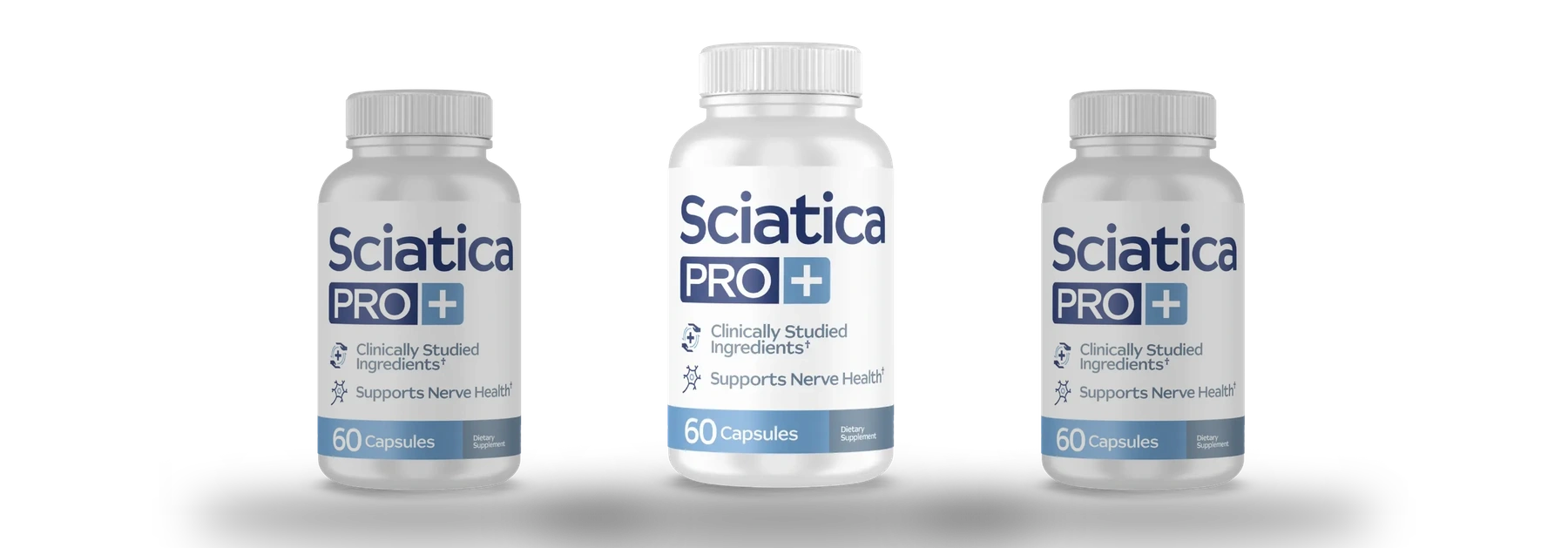
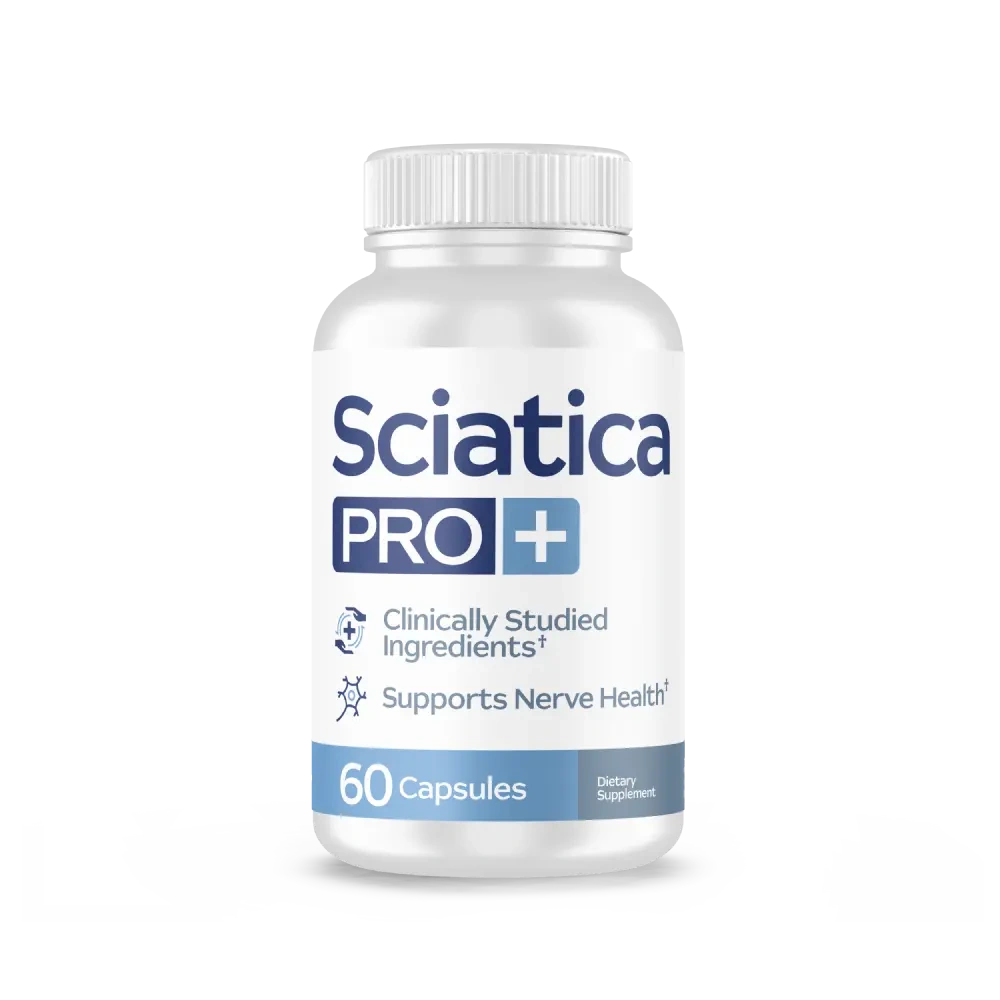
| 5. Serving arithmetic | Pass | 60 capsules at two a day is 30 servings, which is the month the pack describes. The figures reconcile. |
| 6. Refund route | Pass | 60 days from the date of purchase, opened bottles included, with a phone number and a returns address. Return postage is the buyer's. |
| 7. The claim on the front | Partial | The label claims studied ingredients and support for nerve health, both of which are inside the rules. Marketing elsewhere for this product goes far beyond them, which is the reason for a partial rather than a pass. |
Scored by the desk that sells the product. That is a conflict of interest, which is why the reasoning column is printed and the failing rows come first in the section below.
Four passes, one partial and two failures. A seller publishing that is not being noble about it: a scorecard with seven ticks would be worthless to you and therefore worthless to this desk.
The two rows this label fails, in detail
What each failure is, and the one thing that makes them visible at all.
Both failures are about amounts, and the second is really about units.
Check 2: acetyl L-carnitine at 50 mg
The clearest dose gap on the panel. The two 52-week trials used 1,500 and 3,000 mg a day, and the pain benefit showed only in the 3,000 mg group. Fifty milligrams is roughly three per cent of the lower arm. Nobody has studied 50 mg, so the honest position is that nothing is known about it rather than that it does nothing. Benfotiamine at 150 mg sits in the same category, at half the lowest dose BENDIP used, and BENDIP's benefit was clearer at the higher arm.
Check 3: ashwagandha and turmeric as powders
The trials behind ashwagandha used 300 to 600 mg a day of standardised extract, and measured stress rather than nerve function. This panel carries 25 mg of root powder, which is a different material as well as a smaller number. Turmeric is worse arithmetically: at roughly three per cent curcumin, 25 mg of powder supplies about 0.8 mg against trial doses measured in grams, and curcumin absorbs poorly even at those. Broccoli powder is in the same position with no human trial at this form or amount at all.
The fair counterweight, and it is a real one: because every amount is printed, these two failures are visible. A proprietary blend holding the same ingredients at the same amounts would fail just as badly and nobody outside the factory could prove it. The ingredients page works through all ten rows with the same candour.
The rows it passes, and why they are worth something
Four rows, and what each one is actually evidence of.
A passing row on a checklist nobody fails means nothing. These four are worth reading precisely because the two above are printed beside them.
- Every amount is printed. Ten ingredients, ten figures, no shared total. That is the check that makes all the others possible, and a good deal of this category cannot pass it.
- The largest amount went to the best-evidenced ingredient. Alpha lipoic acid at 400 mg is two-thirds of the 600 mg the oral trials settled on. It is not the tested dose, and it is the same order of magnitude, which is more than most formulas manage.
- The plant parts are named. Root for ashwagandha and turmeric, leaf for broccoli. Small, and it is the difference between knowing what you bought and guessing.
- The arithmetic reconciles. Sixty capsules, two a day, thirty servings, one month. Nothing on the pack needs to be taken on trust to make the numbers work.
- The window is longer than the supply on two of three packs. 60 days from purchase, with the three-bottle pack running 90 days, so the decision is not being made on the last possible morning.
Five things on a label that look like checks and are not
Five badges and one number, and the smaller question each actually answers.
Most of the front of a supplement pack is designed to feel like information. These five are the ones that most reliably persuade people of something they do not establish.
| What it looks like | What it actually establishes |
|---|---|
| FDA-registered facility | That the factory is listed with the agency. Not an inspection result, not an approval, and no dietary supplement is FDA approved. |
| GMP certified | That the plant documents and controls its process to a standard. A process statement, not a test of the bottle in your hand. |
| Doctor formulated | Usually nothing checkable. Look for a name, a credential and a date. Without all three there is nobody to ask. |
| Natural ingredients | The least regulated phrase on any pack, with no agreed definition in supplement labelling. |
| % Daily Value | How an amount compares with a general population requirement. It measures nutritional adequacy, not effect, and a large percentage is not a large result. |
None of these five is dishonest on its own. Each one answers a smaller question than the packaging implies.
A sixth belongs here too, and it is the star rating. An average score compiled by the seller from its own customers measures satisfaction, not efficacy, and for a condition that usually improves on its own it cannot separate the two. The reviews page prints this product's own figures with exactly that caveat attached.
What seven checks still cannot tell you
Three things a transparent label still does not buy you, and one that outranks them.
The checklist measures whether a label can be read and whether the amounts on it are serious. Three things sit outside its reach, and pretending otherwise would make it less useful rather than more.
It cannot tell you whether the capsule contains what the panel says. That is what independent testing is for, and a lot number is a filing reference rather than an assay. It cannot tell you whether an ingredient interacts with what you already take, which depends on your prescriptions rather than on the panel. And a perfectly transparent label can print a researched dose of an ingredient whose research is weak: the Cochrane review of B vitamins for nerve symptoms is a good example of evidence that is honest, published and not encouraging.
Used inside those limits the seven checks do a specific job well. They let you compare two bottles honestly, rule out the products that have decided you do not need the numbers, and know which questions are still open after you have bought.
No checklist reaches the reason most people are reading one. If leg pain is new, severe or getting worse, or if you have progressive weakness, numbness around the groin or saddle area, or any new change in bladder or bowel control, that is an appointment today rather than a purchase. Those can indicate cauda equina syndrome, and guideline summaries put assessment ahead of everything else for exactly that reason.
Sources cited in this checklist
The papers behind the dose figures and the powder arithmetic above.
- Ziegler D, Ametov A, et al. Oral treatment with alpha-lipoic acid improves symptomatic diabetic polyneuropathy: the SYDNEY 2 trial. Diabetes Care. 2006;29(11):2365-70. PMID 17065669. https://pubmed.ncbi.nlm.nih.gov/17065669/
- Sima AA, Calvani M, et al. Acetyl-L-carnitine improves pain, nerve regeneration, and vibratory perception in patients with chronic diabetic neuropathy: an analysis of two randomized placebo-controlled trials. Diabetes Care. 2005;28(1):89-94. PMID 15616239. https://pubmed.ncbi.nlm.nih.gov/15616239/
- Stracke H, Gaus W, et al. Benfotiamine in diabetic polyneuropathy (BENDIP): results of a randomised, double blind, placebo-controlled clinical study. Exp Clin Endocrinol Diabetes. 2008;116(10):600-5. PMID 18473286. https://pubmed.ncbi.nlm.nih.gov/18473286/
- Akhgarjand C, Asoudeh F, et al. Does Ashwagandha supplementation have a beneficial effect on the management of anxiety and stress? A systematic review and meta-analysis of randomized controlled trials. Phytother Res. 2022;36(11):4115-4124. PMID 36017529. https://pubmed.ncbi.nlm.nih.gov/36017529/
- Chaurasiya ND, Uniyal GC, et al. Analysis of withanolides in root and leaf of Withania somnifera by HPLC with photodiode array and evaporative light scattering detection. Phytochem Anal. 2008;19(2):148-54. PMID 17879227. https://pubmed.ncbi.nlm.nih.gov/17879227/
- Tayyem RF, Heath DD, et al. Curcumin content of turmeric and curry powders. Nutr Cancer. 2006;55(2):126-31. PMID 17044766. https://pubmed.ncbi.nlm.nih.gov/17044766/
- Anand P, Kunnumakkara AB, et al. Bioavailability of curcumin: problems and promises. Mol Pharm. 2007;4(6):807-18. PMID 17999464. https://pubmed.ncbi.nlm.nih.gov/17999464/
- Ang CD, Alviar MJ, et al. Vitamin B for treating peripheral neuropathy. Cochrane Database Syst Rev. 2008;2008(3):CD004573. PMID 18646107. https://pubmed.ncbi.nlm.nih.gov/18646107/
- Long B, Koyfman A, et al. Evaluation and management of cauda equina syndrome in the emergency department. Am J Emerg Med. 2020;38(1):143-148. PMID 31471075. https://pubmed.ncbi.nlm.nih.gov/31471075/
- Bernstein IA, Malik Q, et al. Low back pain and sciatica: summary of NICE guidance. BMJ. 2017;356:i6748. PMID 28062522. https://pubmed.ncbi.nlm.nih.gov/28062522/
Order Sciatica PRO+ on the official website
Four passes, one partial and two failures on the scorecard above. If that trade suits you, packs carry 60 days from the date of purchase and the panel is published in full on this website.
Packs from $158 · six bottles for $294 · 60-day money-back guarantee
Order Sciatica PRO+ On The Official WebsiteTwo capsules a day · 60 per bottle · lot SCI-26/GE-2574