Sciatica PRO+ Official Website › Blog › Acetyl L-carnitine
Fifty Milligrams Of Acetyl L-Carnitine: Reading A Token Amount
Every amount on this panel is printed, which means every amount can be checked. One of them checks badly. Acetyl L-carnitine appears at 50 mg against trials that used 1,500 and 3,000, and this is what that gap does and does not mean.
- The neuropathy trials used 1,500 and 3,000 mg a day, over 52 weeks.
- The pain benefit appeared in the 3,000 mg group and not in the 1,500 mg one.
- This label carries 50 mg, roughly three per cent of the lower arm.
- Nobody has tested 50 mg, so the honest position is that nothing is known about it rather than that it does nothing.
- Even at the full dose, the Cochrane review judged the evidence uncertain.
- All of that research was in diabetic nerve damage, which is a different problem from a compressed nerve root.
What acetyl L-carnitine is
Carnitine's job is transport. It carries long-chain fatty acids across the mitochondrial membrane so they can be burned for energy, which makes it central to how cells with high energy demands are fuelled. The acetylated form crosses into nervous tissue more readily and supplies acetyl groups for other reactions besides.
The nerve interest came from animal work suggesting it supported the regeneration of damaged fibres. That is a more ambitious claim than anything else on this panel makes, which is part of why the ingredient carries the reputation it does.
Reputation is not dose, though, and the human trials are where the two separate.
The trials, and the arm that mattered
The reference everyone cites is a pooled analysis of two 52-week randomised placebo-controlled trials. Its design is what makes it so useful for reading a label: it ran two doses, so it reports what happened at each.
| Arm in the trials | Daily dose | What happened |
|---|---|---|
| Lower arm | 1,500 mg a day | Did not show the pain benefit the higher arm did, over 52 weeks. |
| Higher arm | 3,000 mg a day | Showed improvement in pain scores, and in some nerve fibre measures. |
| This label | 50 mg a day | About 3% of the lower arm. No trial has used it, so there is no result to report. |
From the pooled analysis of two 52-week randomised placebo-controlled trials. The third row is arithmetic, not a finding.
That split is the single most important fact about this ingredient. It is not a study showing that acetyl L-carnitine helps. It is a study showing that 3,000 mg a day helped and 1,500 mg a day did not, over a year.
An ingredient with a dose threshold inside its own trial is an ingredient where the amount on a label is the whole question. A later meta-analysis of the neuropathic pain trials pooled a wider set of studies and found an effect across them, and the doses in that literature are measured in grams throughout.
What 50 mg looks like at scale
Percentages are easy to skim past, so it is worth converting the gap into something physical.
| To reach | You would need | In capsules of this formula |
|---|---|---|
| 1,500 mg a day | 30 times the amount on this panel | 60 capsules a day |
| 3,000 mg a day | 60 times the amount | 120 capsules a day |
| Half of the lower arm | 15 times the amount | 30 capsules a day |
| The label dose | The amount on this panel | 2 capsules a day |
A scale illustration, not an instruction. Nobody should take more than the label states, and the point of the arithmetic is that the gap cannot be closed by taking more of this product.
Two capsules a day is the label dose, and it is the only dose anyone should take. The table exists to show that the distance between this row and its research is not the kind of gap a slightly larger serving would close.
For comparison, alpha lipoic acid on the same panel sits at two-thirds of its trial dose and benfotiamine at half the lowest one. The article on that row works through what a two-thirds figure can honestly be said to be. This row is a different category of distance.
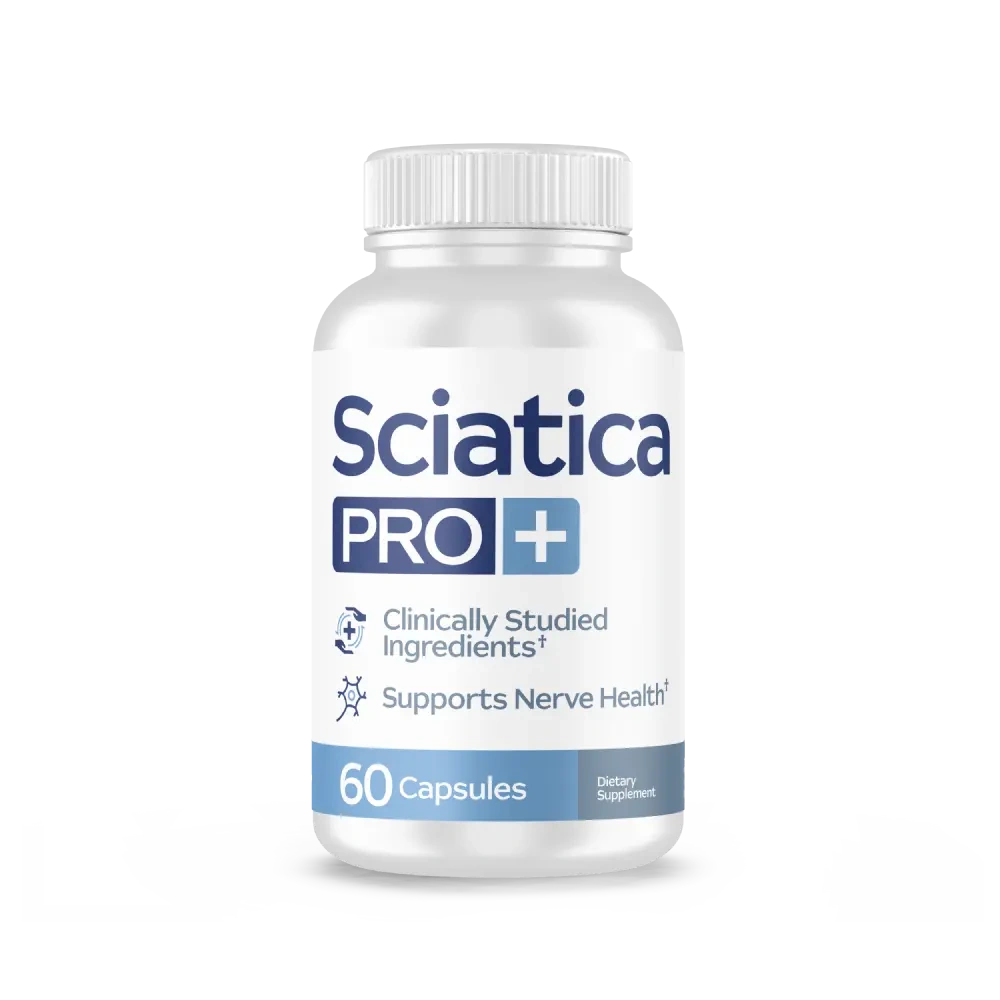
The whole Sciatica PRO+ panel, with every amount printed
Ten rows, ten figures, no proprietary blend, which is what makes an article like this one possible to write. Two capsules a day, 60 to a bottle, 60 days from purchase to decide.
Packs from $158 · six bottles for $294 · 60-day money-back guarantee
Order Sciatica PRO+ On The Official WebsiteTwo capsules a day · 60 per bottle · lot SCI-26/GE-2574
What untested actually means
This is the part that gets flattened in both directions, and the accurate version is narrower than either.
It does not mean the ingredient does nothing
Nobody has measured 50 mg of acetyl L-carnitine in a trial of nerve symptoms. A claim that it does nothing would be as unsupported as a claim that it does something, because the study that would settle it has not been run.
What can be said is that the dose which produced a measurable effect was sixty times larger, and that the dose half that size did not produce one.
It does mean nothing can be claimed for it
A label may say an ingredient has been clinically studied, and that is true here: acetyl L-carnitine has been studied extensively. What the phrase does not say is that this amount was studied.
The distance between those two sentences is where a great deal of this category lives. Reading it precisely is the most useful skill anyone can bring to a supplement panel, and the checklist guide turns it into a check you can run in seconds.
Why a token amount appears on a label at all
It is worth being honest about the commercial logic, because it explains the pattern across the whole category rather than one bottle.
- Ingredient count sells. A panel with ten named ingredients reads as more generous than one with four, whatever the amounts beside them.
- Gram-scale ingredients are expensive and bulky. Three grams of anything does not fit in two capsules alongside nine other rows, so something has to give, and what usually gives is the amount.
- A name earns a citation. Once an ingredient is on the panel, its research can be referenced in the marketing, and the reader is left to assume the amounts line up.
- Nothing about it is unlawful. Printing 50 mg of an ingredient is accurate labelling. The gap between that figure and a trial dose is something a buyer has to close themselves, which is the reason articles like this one exist.
The fair counterweight, and it is a real one: this panel prints the number. A formula holding the same 50 mg inside a shared blend total would be in exactly the same position and nobody outside the factory could demonstrate it.
What the reviews say even at full dose
Suppose a label did carry 3,000 mg a day. It would still be worth knowing what the systematic reviewers made of the literature.
The Cochrane review of acetyl L-carnitine for diabetic peripheral neuropathy assessed the trials and judged the evidence uncertain, with the usual reservations about study size, duration and the risk of bias in the pooled set.
That is not a dismissal, and it is not an endorsement. It is the reviewers saying the question is open, which is a more common verdict in supplement research than the marketing around it would suggest.
So the dose gap on this panel sits on top of a base of uncertain evidence, rather than on top of a settled result. Both things are true at once and neither cancels the other.
And the population problem underneath all of it
Everything above concerns trials in people with diabetic polyneuropathy: nerve fibres damaged over years by high blood glucose. That is the population this whole category was studied in, for the practical reason that it is large and well characterised.
Sciatica is something else entirely. The clinical reviews describe it as compression of a nerve root, usually by a disc or by spinal narrowing, diagnosed by examination and usually settling over weeks to months. MedlinePlus is a plain-English starting point for anyone who wants one away from a seller.
So there are two gaps stacked here, not one. The dose gap between 50 mg and the trials, and the gap between the condition those trials studied and the condition on the front of the bottle. Saying only the first would be a half-truth.
How to spot a token amount on any label
This pattern is not unique to one product, and the check takes about ten seconds once you know what you are looking at.
- Find the ingredient the label is named or marketed after. That is where the attention is, and often where the amount is smallest.
- Look up the trial dose once. Most ingredients have a single number the literature converged on, and the nerve health guide collects them for this category in one table.
- Divide. Anything under about a tenth of the trial dose is a name rather than a dose, whatever else the pack says.
- Check the units. Grams and milligrams are easy to confuse when one is written as 1,500 mg and the other as 50 mg on the same panel.
- Then read the whole panel the same way before deciding anything, because one token row and six of them are very different products.
What this changes about the rest of the panel
Not as much as it might, and the reason is worth stating.
This is one row of ten. Four of the others are vitamins at daily-requirement amounts, which do what daily requirements do. Alpha lipoic acid at 400 mg is the largest number here and sits in the same order of magnitude as its research. Benfotiamine at 150 mg is half the lowest dose its trials used.
So the accurate summary of this formula is mixed rather than damning, and this row is the clearest example of its weaker half. Anyone weighing the packs on the pricing page is weighing that mixture, and the 60-day window is what makes the decision reversible.
References
- Sima AA, Calvani M, et al. Acetyl-L-carnitine improves pain, nerve regeneration, and vibratory perception in patients with chronic diabetic neuropathy: an analysis of two randomized placebo-controlled trials. Diabetes Care. 2005;28(1):89-94. PMID 15616239. https://pubmed.ncbi.nlm.nih.gov/15616239/
- Li S, Li Q, et al. Acetyl-L-carnitine in the treatment of peripheral neuropathic pain: a systematic review and meta-analysis of randomized controlled trials. PLoS One. 2015;10(3):e0119479. PMID 25751285. https://pubmed.ncbi.nlm.nih.gov/25751285/
- Rolim LC, da Silva EM, et al. Acetyl-L-carnitine for the treatment of diabetic peripheral neuropathy. Cochrane Database Syst Rev. 2019;6(6):CD011265. PMID 31201734. https://pubmed.ncbi.nlm.nih.gov/31201734/
- Jensen RK, Kongsted A, et al. Diagnosis and treatment of sciatica. BMJ. 2019;367:l6273. PMID 31744805. https://pubmed.ncbi.nlm.nih.gov/31744805/
- MedlinePlus. Sciatica. U.S. National Library of Medicine. https://medlineplus.gov/sciatica.html