Sciatica PRO+ Official Website › Blog › Powder or extract
Powder Or Extract? Why 25 mg Of Ashwagandha Is Not 25 mg Of Ashwagandha
Two bottles can print the same plant, the same weight and the same plant part, and deliver amounts of the active compound that differ by a factor of twenty. The word that separates them is usually one line further along the row, and most people read straight past it.
- A standardised extract prints a percentage or a ratio, so the active compound can be calculated. A raw powder prints a plant.
- Ashwagandha's trials used 300 to 600 mg a day of standardised extract, and measured stress and sleep rather than nerve function.
- Withanolide content differs between plant parts, which is why a label naming the part is telling you something real.
- Turmeric powder averages about 3.14 per cent curcumin, so 25 mg of it supplies under a milligram.
- Two cautions hold for ashwagandha whatever the amount: thyroid hormones and liver injury.
Two bottles, the same number, different products
Picture two supplement panels side by side. Both print an ashwagandha row. Both say root. Both say 300 mg. One of them says extract and carries a standardisation figure; the other says powder.
Those two products are not comparable, and the difference is not small. An extract concentrates the compounds the research is interested in, sometimes by a factor of twenty or more against the raw material. The weight on the panel is the weight of the material in the capsule, not the weight of what the material contains.
This is the most common way a supplement panel misleads without printing anything untrue, and nobody has to intend it for it to happen.
What a standardised extract actually is
An extract is made by taking the plant material, pulling the compounds of interest out with a solvent, removing the solvent and drying what remains. Standardising it means adjusting the result so that a stated percentage of the finished powder is the compound being targeted.
| Raw powder | Standardised extract | |
|---|---|---|
| What it is | The dried plant part, milled. | The plant processed with a solvent to concentrate particular compounds, then dried. |
| What the label tells you | A plant, a part and a weight. | A plant, a part, a weight, and a percentage or ratio for the active compounds. |
| Can you calculate the active amount? | Not from the label alone. | Yes. That is what the standardisation figure is for. |
| What the trials used | Rarely anything. | Almost always this, which is why trial doses and powder weights do not compare. |
| Typical weight on a panel | Tens of milligrams. | Hundreds of milligrams, because the dose is set by the active content. |
Both are legitimate ingredients. The error is treating a milligram of one as a milligram of the other.
The practical consequence is the last row. Extract doses on a panel run into the hundreds of milligrams because that is what delivers a researched amount of the active compound. Powder rows run in the tens, because a powder row is generally there for the name rather than for the dose.
What the ashwagandha trials used
Ashwagandha, Withania somnifera, is an old medicinal plant with a genuinely modern trial literature. A dose-response meta-analysis of randomised trials found effects on anxiety and stress at 300 to 600 mg a day of standardised extract.
Two things in that sentence do a lot of work. The material was extract, and the outcome was stress rather than nerve function. There is no trial evidence connecting ashwagandha to peripheral nerve health at all, at any dose or in any form, so a nerve label carrying it is borrowing a reputation built in a different field.
None of which makes it a bad ingredient. It makes it an ingredient whose research is about something else, at a dose ten to twenty times larger than a typical powder row, in a material that concentrates what the research measured.
Root, leaf, and why the part is named
A label that names the plant part is telling you something checkable, and one that names only the plant has left itself room.
An analysis comparing root and leaf by high-performance liquid chromatography found the withanolide profile differs between them. Root and leaf are not interchangeable raw materials, and the trials that produced the 300 to 600 mg figure used root extract.
So the useful reading order for any botanical row is: plant, part, form, weight, standardisation. Four of those five are usually printed. The one most often missing is the one that would let you calculate anything.
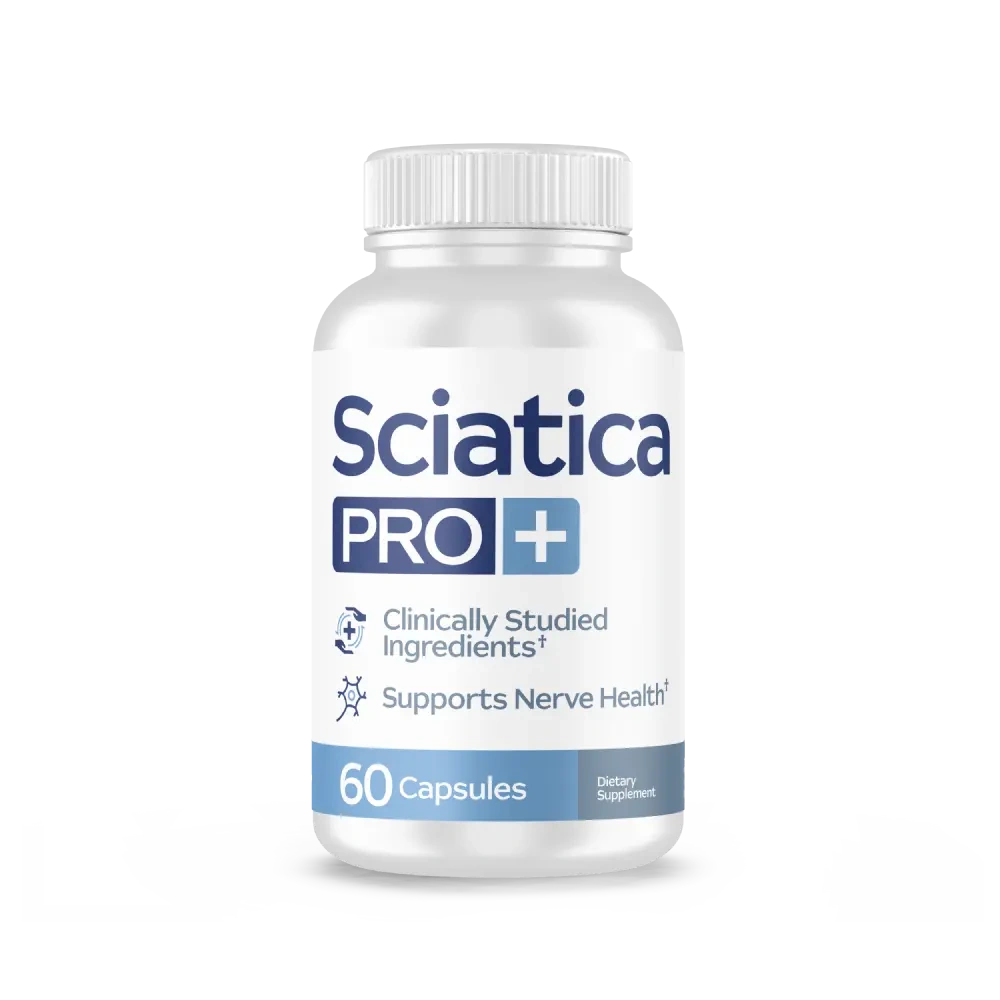
Every Sciatica PRO+ row names its plant and its part
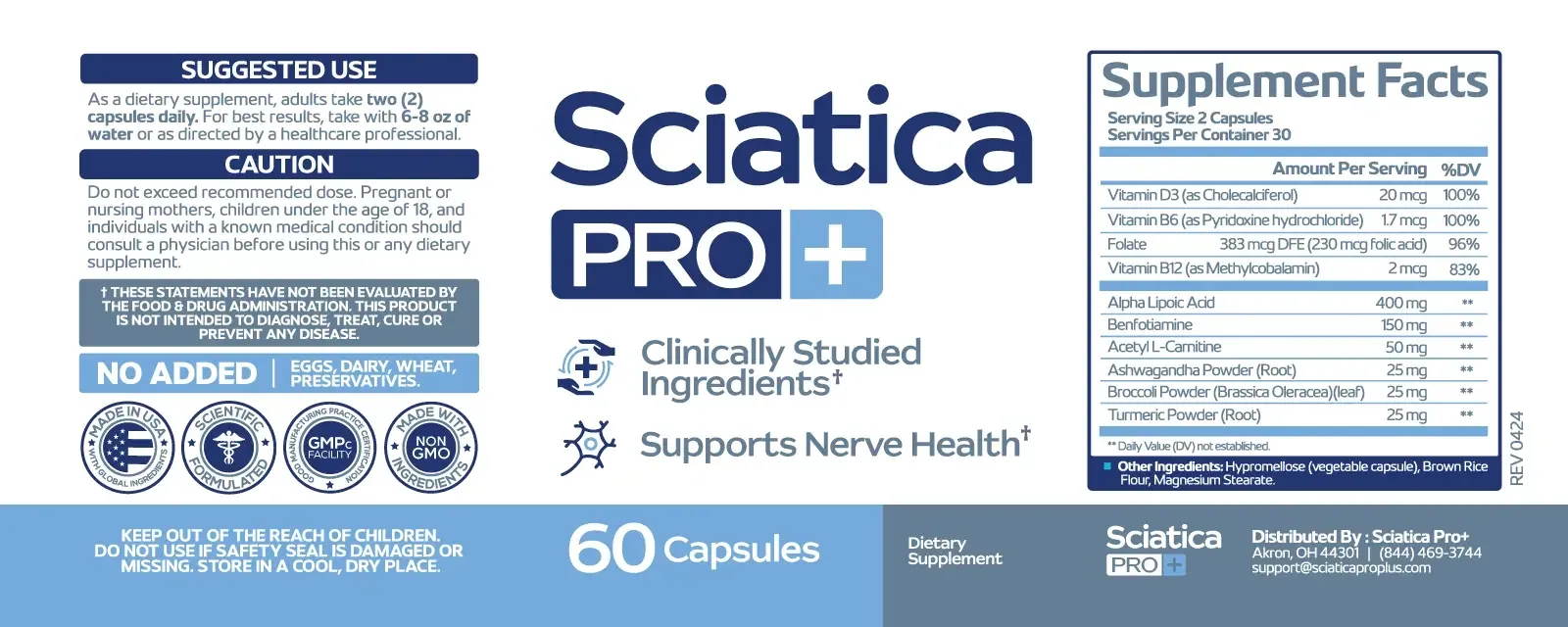
Ashwagandha root, turmeric root, broccoli leaf, each with a printed weight. Two capsules a day, 60 to a bottle, and 60 days from purchase to change your mind.
Packs from $158 · six bottles for $294 · 60-day money-back guarantee
Order Sciatica PRO+ On The Official WebsiteTwo capsules a day · 60 per bottle · lot SCI-26/GE-2574
The same lesson, with worse arithmetic
Turmeric makes the point more starkly than ashwagandha does, because somebody has measured the gap.
An analysis of 28 commercial turmeric and curry powders found pure turmeric powder averaging about 3.14 per cent curcumin by weight. Curcumin is the compound essentially all the research is about, and the trials use standardised extracts at 500 to 2,000 mg a day.
| If the panel prints | Curcumin that supplies | Against trial doses of |
|---|---|---|
| 25 mg of turmeric powder | About 0.8 mg | 500 to 2,000 mg of standardised curcumin |
| 100 mg of turmeric powder | About 3 mg | The same |
| 1,000 mg of turmeric powder | About 31 mg | Still a fraction of the low end |
| 500 mg of a 95% extract | About 475 mg | Inside the researched range |
Arithmetic on a measured average of about 3.14 per cent curcumin in commercial turmeric powder. Individual batches vary, which is itself part of the point.
Read down the middle column and the problem is obvious. Even a whole gram of culinary turmeric powder, which is a heaped teaspoon and more than anyone puts in a capsule, carries about 31 mg of curcumin.
There is a second problem stacked on the first, which is that curcumin absorbs poorly even when a trial supplies grams of it. That is why piperine appears alongside it in so much of the research and why reformulated versions exist at all.
Why a powder row still gets printed
Because it is accurate, inexpensive and familiar. Turmeric is a recognised name that readers associate with inflammation, and putting 25 mg of it on a panel is not a false statement about anything.
The reader supplies the rest, and that is the mechanism worth understanding rather than the individual product.
How to read a botanical row in ten seconds
A short routine that works on any label in any shop.
- Find the word extract or powder. If neither appears, assume powder, because a manufacturer paying for an extract prints the word.
- Look for a percentage or a ratio. Standardised to 5% withanolides, or a 10:1 extract. That figure is what makes the row calculable.
- Check the plant part. Root, leaf, seed, bark or aerial parts, each with a different composition.
- Compare like with like. A trial dose of extract is not comparable with a powder weight, and converting between them without a standardisation figure is impossible.
- Then ask what the trials measured, because an ingredient studied for sleep is not evidence about nerves however the amount compares.
Root extract at 600 mg a day shifted thyroid hormone levels in an eight-week randomised trial, and a case series from Iceland and the U.S. Drug-Induced Liver Injury Network documents liver injury with jaundice appearing two to twelve weeks after starting. NCCIH advises against ashwagandha in thyroid and autoimmune conditions, in pregnancy, and before surgery. Those cautions are printed here even though the amount on this panel is small, because a reader stacking several products is the person they are for.
Cautions that hold at any amount
The box above lists them. The principle behind it is worth a sentence, because it applies well beyond this ingredient.
Botanical cautions are usually derived from trials at researched doses, so a small amount carries a proportionally smaller concern. What that reasoning misses is stacking: several products each carrying a modest amount of the same plant add up, and nobody is adding them up for you.
The side effects page gathers the whole panel in one place for exactly that reason.
Where that leaves the three botanical rows here
Said plainly, because this website sells the product and pretending otherwise would waste your time.
Ashwagandha at 25 mg of root powder, turmeric at 25 mg of root powder and broccoli at 25 mg of leaf powder are the three rows on this panel where the amounts are furthest from anything anyone has studied. The trials behind ashwagandha used extract at ten to twenty-four times the weight, and the turmeric arithmetic is in the table above.
What the panel does do is print all three, name the plant part for each, and leave nothing inside a shared blend total. That is what makes this article checkable rather than speculative, and the ingredients page applies the same treatment to the other seven rows.
If botanicals at researched doses are what you want, this is not the formula for that, and the checklist guide will help you find one that is.
References
- Akhgarjand C, Asoudeh F, et al. Does Ashwagandha supplementation have a beneficial effect on the management of anxiety and stress? A systematic review and meta-analysis of randomized controlled trials. Phytother Res. 2022;36(11):4115-4124. PMID 36017529. https://pubmed.ncbi.nlm.nih.gov/36017529/
- Chaurasiya ND, Uniyal GC, et al. Analysis of withanolides in root and leaf of Withania somnifera by HPLC with photodiode array and evaporative light scattering detection. Phytochem Anal. 2008;19(2):148-54. PMID 17879227. https://pubmed.ncbi.nlm.nih.gov/17879227/
- Sharma AK, Basu I, et al. Efficacy and Safety of Ashwagandha Root Extract in Subclinical Hypothyroid Patients: A Double-Blind, Randomized Placebo-Controlled Trial. J Altern Complement Med. 2018;24(3):243-248. PMID 28829155. https://pubmed.ncbi.nlm.nih.gov/28829155/
- Bjornsson HK, Bjornsson ES, et al. Ashwagandha-induced liver injury: A case series from Iceland and the US Drug-Induced Liver Injury Network. Liver Int. 2020;40(4):825-829. PMID 31991029. https://pubmed.ncbi.nlm.nih.gov/31991029/
- National Center for Complementary and Integrative Health. Ashwagandha. NCCIH, National Institutes of Health. https://www.nccih.nih.gov/health/ashwagandha
- Tayyem RF, Heath DD, et al. Curcumin content of turmeric and curry powders. Nutr Cancer. 2006;55(2):126-31. PMID 17044766. https://pubmed.ncbi.nlm.nih.gov/17044766/